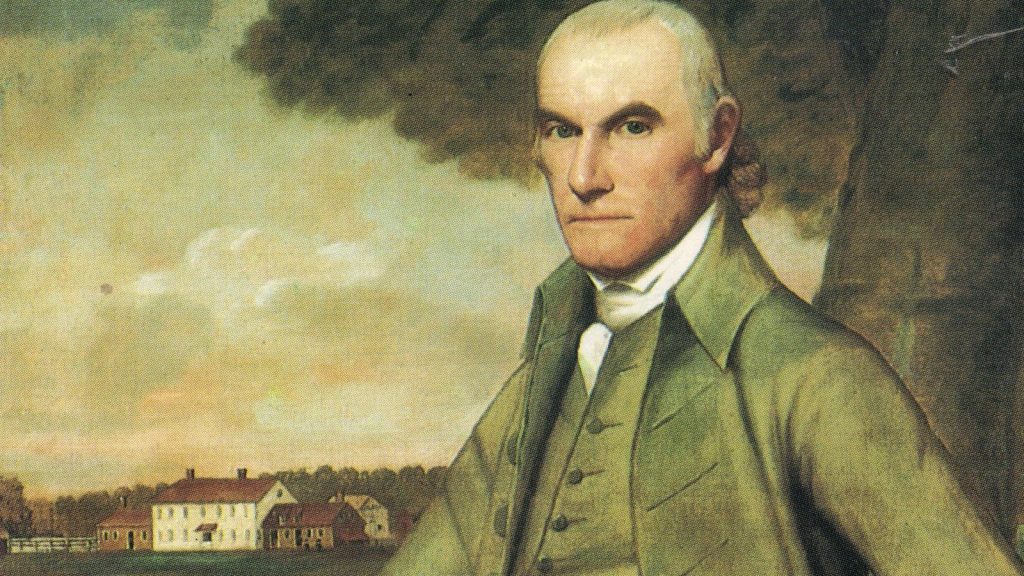
William Floyd was born in 1734 in New York. His father and mother, Nicholl Floyd and Tabitha Smith, owned a large farm. The young Floyd worked the farm until he was in his early 20s, when his parents both died. He then inherited the farm and the responsibilities for it and his siblings. Because of this upbringing, Floyd had little formal education, though he was a hard worker and learned to accurately manage his account.
Thanks to the prosperity of his farm, Floyd was introduced into politics. He served in various positions on the local level and was later elected as a New York delegate to the first and second Continental Congress’s. Of Floyd, Edmund Rutledge, a fellow delegate and signer of the Declaration of Independence, said, “[Floyd was one of those] good men who never quit their chairs.” Though he remained quiet throughout debates, he was always present for votes and was a strong supporter of independence.
Following the signing of the Declaration of Independence, the British army defeated the American army in the battle of Brooklyn. Following this, the Floyd farm was confiscated by the British. Floyd’s wife and children fled to Connecticut for safety. His farm remained in possession of the enemy for 7 years. During that time his wife died, and when he returned home in 1783, his home was destroyed.
Despite the opposition Floyd faced he remained loyal to the patriot cause. Following the ratification of the Constitution, he served in congress. He later was a presidential elector, voting for George Washingtons second term in office. Eventually, Floyd retired to a large frontier property with his second wife. He lived there until his death in 1821.
Additional Resources