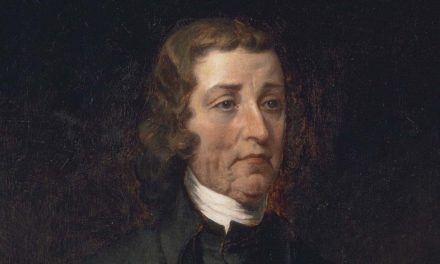
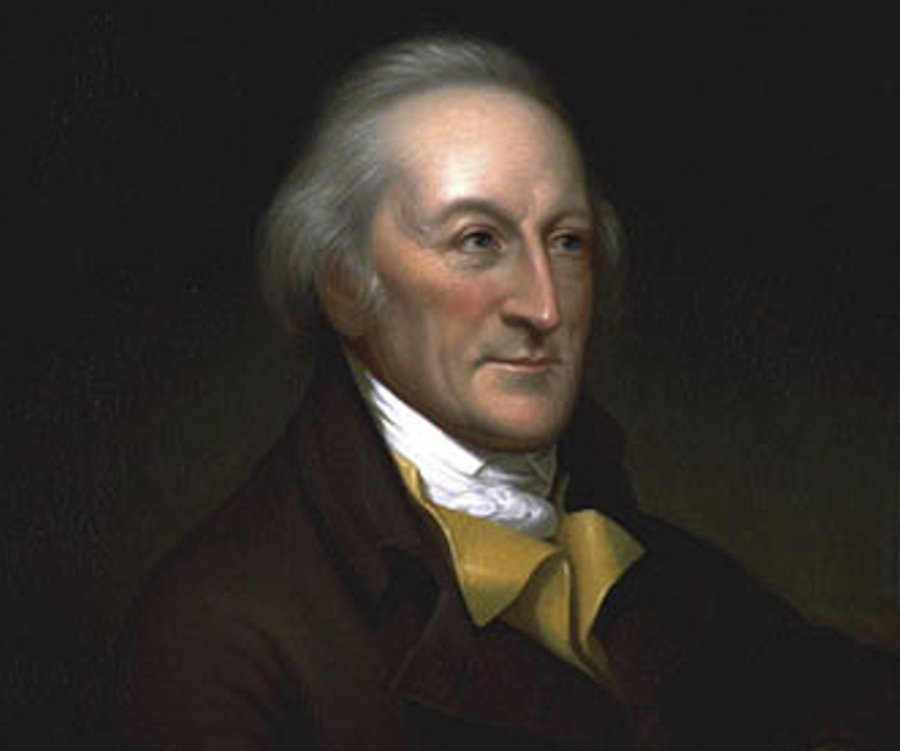
George Clymer was born in March 1739 to Christopher Clymer and Deborah Fitzwater. His mother was a quaker, and his father an episcopalian. Because she married outside the faith, Deborah was disowned by her religion. Following his mothers death when he was two and his fathers death when he was seven, Clymer was cared for by his childless aunt and uncle, Hannah and William Coleman in Philadelphia.
While Clymer’s early years are not well recorded, it appears that he had a good childhood. His uncle owned a successful dry goods store, and as one of Benjamin Franklins close friends, partnered in many businesses and social projects. Coleman was a role model to the young Clymer.
Though Clymer had no formal education, he was an avid student. His favorite author was Johnathan Swift, and he learned business early in his life. His early successes led him to set out on his own to establish a trading firm. After the firm’s success, Clymer married Elizabeth Meredith.
As tensions rose between the colonies and Great Britain, Clymer was among the many merchants who opposed the rising taxes and tightened control over trade. He signed a non-importation agreement with hundreds of other merchants from Philadelphia following the Stamp Act and helped organize boycotts for other restrictive acts.
Clymer was committed to the cause of liberty and independence by the time fighting broke out. He served on various committees throughout the war. Though he was not a member of the delegation when the declaration was voted for on July 2, 1776, he did sign the document in late July or early August, alongside several others who were elected as delegates at the Pennsylvania constitutional convention.
The British knew of Clymer’s support and action in the cause of independence and went out of their way to ransack his home. Despite the many challenges he faced, Clymer remained loyal to the ideas that led this country to ultimately gain its freedom.
The remainder of Clymer’s life was filled with civic duties. He served on various government committees, and served on the Continental Congress multiple times, and was a part of the Constitutional Convention. Clymer died in 1813, one of few to sign both the Declaration of Independence and the Constitution. William Pierce, a delegate at the Constitutional Convention, said that Clymer was a respectable man, and highly esteemed.
Additional Resources
George Clymer | Descendants of the Signers of the Declaration of Independence