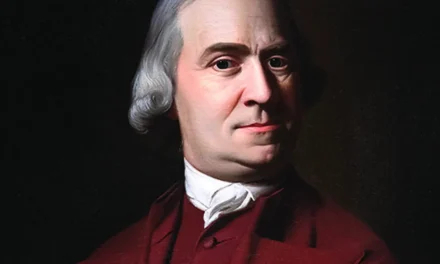
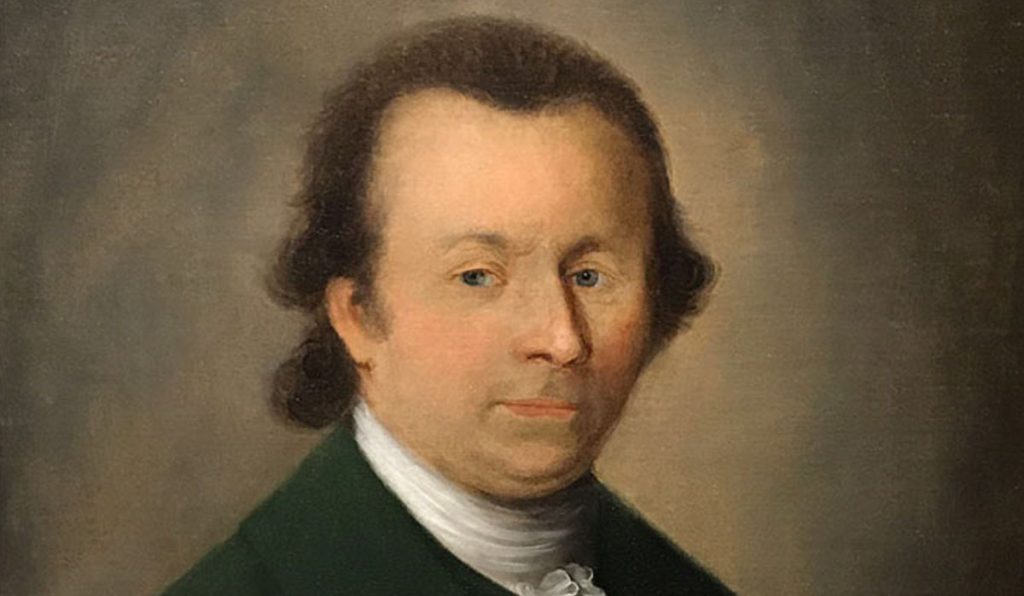
Button Gwinnett was born in 1735 in Gloucester, England. He worked as an apprentice to his uncle, a greengrocer, and later as an apprentice to an ironmonger. He married Ann Bourne at 22 and began his family. In 1762 the Gwinnett’s immigrated to the colonies with their three daughters.
Unlike many of his peers in the Continental Congress, Gwinnett was not a successful businessman. Prior to settling in Savannah Georgia, Gwinnett attempted to build a business in Newfoundland, and then later Jamaica. Once he moved to Savannah, he became a greengrocer but failed to turn a profit yet again. Eventually he purchased St. Catherines Island on credit, with hopes to run a plantation. This too ended in failure, and the return of the property to his creditors.
Despite his many failed attempts to turn a profit through his businesses, Gwinnett grew in popularity in Savannah. As his popularity grew, he was appointed to various public positions, beginning as a Justice of Peace, and shortly afterwards gaining a seat in the colonial assembly. Over the next several years, his interest in politics and the relations between the colonies and Britain grew. At first, he doubted that the colonies could put up a successful resistance, though he was eventually persuaded otherwise.
Eventually, Gwinnett was chosen as a delegate to the Second Continental Congress. Though he played a minor role in the debate surrounding the declaration and the calls for independence, he impressed others in the congress. John Adams said, “[Lyman] Hall and Gwinnett are both intelligent and spirited men, who made a powerful addition to our Phalanx.”
Gwinnett voted for the Declaration and signed it on August 2, 1776. He returned to Georgia seeking an appointment as commander of the continental battalion in Georgia. To his chagrin, his archenemy, Lachlan McIntosh, won the position. Throughout the revolution, the rivalry between McIntosh and Gwinnett intensified. Eventually, Gwinnett challenged McIntosh to a gentlemen’s duel, ending in the injury of both men, and the death of Gwinnett weeks later following a bout with gangrene.
Additional Resources
Button Gwinnett of Georgia: Signer of the Declaration of Independence – Revolutionary War Journal